Key Types of Solar Radiation Sensors and Their Uses
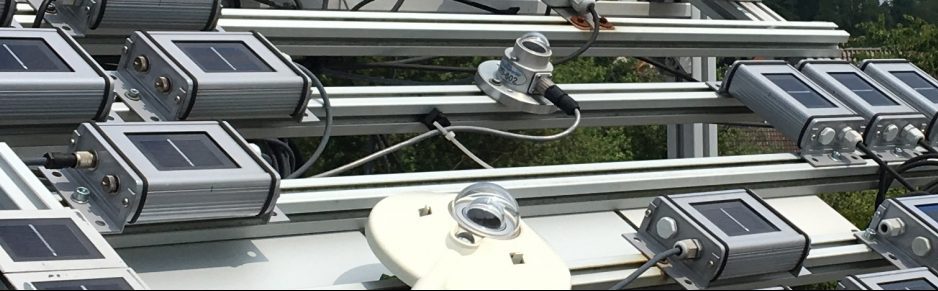
Solar radiation sensors are essential tools for measuring the intensity and quality of sunlight. They are widely used in solar energy projects, meteorology, agriculture, and environmental monitoring. By providing accurate data on solar irradiance, these sensors help optimize energy generation, track weather patterns, and support research on climate and plant growth. Understanding the different types of solar radiation sensors and their applications is crucial for selecting the right sensor for specific needs.
A Solar Radiation Sensor measures the amount of solar energy received per unit area. These sensors convert sunlight into electrical signals, which can be recorded and analyzed. The choice of sensor depends on factors such as required accuracy, wavelength sensitivity, response time, and environmental conditions. Modern solar radiation sensors are designed to provide precise and reliable measurements in both direct sunlight and diffuse light conditions, making them versatile tools for a wide range of applications.
Pyranometers
Pyranometers are among the most common types of solar radiation sensors. They are designed to measure global solar radiation, which includes both direct sunlight and diffuse sky radiation. Pyranometers typically use thermopile detectors or photovoltaic cells to convert solar energy into electrical signals.
Pyranometers are widely used in meteorological stations, solar energy plants, and environmental research. Their high accuracy and broad spectral response make them suitable for monitoring solar panel performance and tracking changes in weather patterns. Regular calibration ensures that pyranometers provide reliable data over time, even under varying environmental conditions.
Pyrheliometers
Unlike pyranometers, pyrheliometers are specifically designed to measure direct beam solar radiation. They are typically mounted on a solar tracker to follow the sun’s movement, ensuring that the sensor is always aligned with the sunlight. Pyrheliometers use collimated detectors to isolate direct sunlight from diffuse sky radiation, providing precise measurements of direct solar irradiance.
These sensors are often used in solar energy research, concentrating solar power (CSP) systems, and performance testing of solar panels. By providing accurate data on direct sunlight, pyrheliometers help engineers optimize the orientation and efficiency of solar energy systems.
Photodiode-Based Sensors
Photodiode sensors are compact and cost-effective devices that convert light into electrical current. They are commonly used for measuring both global and direct solar radiation. Photodiode sensors are less expensive than pyranometers or pyrheliometers and offer fast response times, making them suitable for real-time monitoring and automation systems.
These sensors are frequently used in solar energy monitoring for rooftops, small-scale solar farms, and educational applications. While photodiode sensors may have a narrower spectral response compared to high-end pyranometers, they provide reliable data for most practical purposes.
Thermopile Sensors
Thermopile sensors consist of multiple thermocouples connected in series or parallel, which generate a voltage proportional to the temperature difference caused by solar radiation. These sensors are highly accurate and stable, making them ideal for scientific research and precise energy monitoring.
Thermopile sensors are commonly used in meteorology, climate research, and solar panel performance testing. Their ability to measure a wide range of irradiance levels and maintain accuracy under varying temperatures makes them highly reliable for long-term monitoring.
Net Radiometers
Net radiometers measure both incoming and outgoing radiation, providing a comprehensive view of the energy balance at a specific location. They are particularly useful in climate studies, agricultural research, and ecosystem monitoring. By analyzing net radiation, researchers can assess heat flux, evapotranspiration, and energy dynamics in natural and built environments.
Net radiometers combine multiple sensors, such as pyranometers and pyrgeometers, to measure shortwave and longwave radiation. This versatility allows them to deliver valuable insights into solar energy availability and environmental conditions.
UV Sensors
Ultraviolet (UV) sensors measure solar radiation in the UV spectrum, which is critical for studying the effects of sunlight on human health, materials, and ecosystems. UV sensors are widely used in meteorology, public health monitoring, and agricultural research.
These sensors help track UV index levels, monitor plant exposure to sunlight, and assess the degradation of materials exposed to UV radiation. By providing targeted measurements in the UV range, these sensors complement broader solar radiation monitoring.
Applications in Solar Energy Systems
Solar radiation sensors play a critical role in optimizing solar energy systems. By providing real-time data on sunlight intensity, they enable solar panels and solar trackers to operate at peak efficiency. Sensors help determine the best orientation, tilt, and tracking strategies, ensuring maximum energy output. Additionally, these sensors support performance monitoring, fault detection, and predictive maintenance in solar power plants.
Conclusion
Solar radiation sensors come in various types, including pyranometers, pyrheliometers, photodiode-based sensors, thermopile sensors, net radiometers, and UV sensors. Each type serves a specific purpose, from measuring global and direct radiation to assessing energy balance and UV exposure. Understanding the features and applications of these sensors allows researchers, engineers, and operators to select the right technology for accurate solar monitoring, efficient energy generation, and informed environmental analysis. By leveraging the capabilities of solar radiation sensors, industries and researchers can optimize solar energy systems, improve safety, and contribute to sustainable energy solutions.