Voice Coil Actuator vs Traditional Linear Actuators: Key Differences
Linear motion systems are essential in modern automation, enabling controlled movement in manufacturing, robotics, medical devices, and precision instrumentation. Among the most widely used technologies are traditional linear actuators and electromagnetic direct-drive systems. While both serve the purpose of producing linear motion, their design principles and performance characteristics differ significantly.
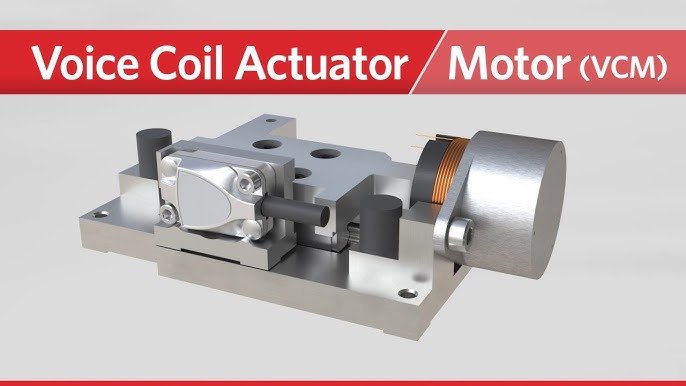
A voice coil actuator is a direct-drive device that generates linear motion through electromagnetic force without relying on mechanical transmission components such as screws or gears. In contrast, traditional linear actuators typically convert rotary motion into linear movement using mechanisms like lead screws, ball screws, or belt drives. These differences fundamentally affect speed, precision, maintenance needs, and overall system behavior. More detailed specifications and configurations of a voice coil actuator can help illustrate why it is often preferred in high-performance motion systems.
How Voice Coil and Traditional Actuators Work
Traditional linear actuators rely on a motor that produces rotary motion. This motion is then converted into linear displacement through mechanical interfaces such as threaded screws or belt systems. While effective, this conversion introduces friction, backlash, and mechanical wear over time.
Voice coil systems, on the other hand, operate using Lorentz force. When current passes through a coil inside a magnetic field, a proportional linear force is generated. This eliminates the need for intermediate mechanical components and allows for smoother and more responsive movement.
The difference in architecture leads to two distinct performance profiles. One emphasizes strength and long travel distances, while the other prioritizes speed and precision.
Key Differences Between Voice Coil and Traditional Linear Actuators
Speed and Dynamic Response
One of the most noticeable differences is response speed. Voice coil systems provide extremely fast acceleration and deceleration due to their low moving mass and lack of mechanical transmission.
Traditional actuators, however, are limited by inertia from gears, screws, and coupling mechanisms. This makes them slower to respond, especially in applications requiring rapid directional changes.
Precision and Motion Control
Voice coil actuators excel in precision applications. Because they operate without backlash or mechanical play, they can achieve extremely fine positioning control, often at the micron or sub-micron level when paired with feedback systems.
Traditional actuators can also be precise, but wear and mechanical clearance over time may reduce repeatability. Backlash in screw-driven systems can introduce positioning errors unless compensated by complex control algorithms.
Mechanical Complexity and Maintenance
Voice coil systems are mechanically simple. With fewer moving parts, they experience significantly less wear and require minimal maintenance. Their non-contact design reduces friction and extends operational lifespan in many applications.
Traditional linear actuators involve more mechanical components such as bearings, screws, and belts. These parts require lubrication, periodic adjustment, and eventual replacement, increasing maintenance demands over time.
Force Output and Stroke Length
Traditional linear actuators generally provide higher force output and longer stroke lengths. This makes them suitable for heavy-duty applications such as industrial automation, lifting systems, and large-scale machinery.
Voice coil actuators are better suited for short to medium stroke applications where speed and precision are more important than force or travel distance.
Noise and Smoothness of Operation
Because voice coil actuators operate without mechanical contact, they produce very smooth and quiet motion. This is critical in environments such as laboratories, optical systems, and medical equipment.
Traditional actuators, while generally reliable, may generate more noise due to mechanical contact between moving components. Vibration can also be more pronounced depending on system design.
Application Scenarios
Each technology serves different industrial needs based on performance priorities.
Voice coil actuators are commonly used in:
- Semiconductor inspection and wafer positioning systems
- Optical focusing and alignment devices
- High-speed pick-and-place systems
- Medical imaging and precision surgical tools
Traditional linear actuators are often found in:
- Industrial automation and material handling systems
- Packaging machinery
- Heavy-duty positioning platforms
- Robotics requiring long travel distances and high force
The choice depends heavily on whether the application prioritizes speed and precision or strength and range.
Selecting the Right Actuator for Your System
Choosing between these technologies requires careful evaluation of system requirements. Engineers typically consider force load, required stroke length, precision tolerance, and duty cycle.
If the application demands rapid response, minimal maintenance, and high-resolution positioning, voice coil technology is often the better fit. If the system requires long travel distances or high force output, traditional actuators may be more suitable.
In many advanced systems, hybrid approaches are also used, combining different actuator types to balance performance characteristics across multiple axes of motion.
Conclusion
Voice coil actuators and traditional linear actuators each bring distinct advantages to motion control systems. While traditional designs excel in strength and range, voice coil technology stands out for its speed, precision, and simplicity. Understanding these key differences allows engineers to select the most effective solution for their specific application, improving performance, reliability, and long-term efficiency in modern automation systems.