Bead Mill Machine vs Other Grinding Equipment: Key Differences
Particle size reduction is a critical process in industries such as coatings, pharmaceuticals, chemicals, and advanced materials. Choosing the right grinding equipment can significantly affect product quality, efficiency, and production cost. Among various technologies available, bead milling has gained strong attention for its ability to deliver fine and uniform particle sizes with high efficiency.
A modern grinding system like the bead mill machine is widely used because it offers controlled particle size reduction through high-energy collision between grinding media and materials. However, to understand its real value, it is important to compare it with other common grinding equipment used in industrial applications.
Understanding Bead Milling Technology
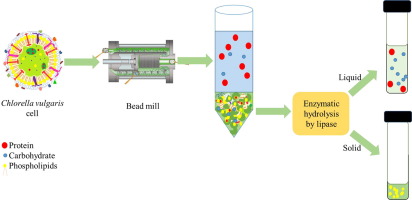
Bead milling works by using small grinding beads inside a rotating chamber. As the rotor moves at high speed, the beads generate intense shear and impact forces that break down particles into smaller sizes.
This process is continuous, efficient, and highly controlled, making it suitable for achieving micron and even sub-micron particle sizes. The key advantage lies in its ability to produce consistent results with narrow particle size distribution.
Bead Mill vs Ball Mill
Ball mills are one of the oldest grinding technologies used in industries such as mining, ceramics, and basic material processing. They operate using large steel balls inside a rotating drum.
While ball mills are effective for coarse grinding, they are not as efficient when fine particle size is required.
Key differences include:
- Bead mills use smaller grinding media for finer results
- Ball mills require longer processing time for similar fineness
- Bead mills provide better particle uniformity
- Ball mills are generally bulkier and less energy-efficient
In modern applications where precision is important, bead mills are often preferred over traditional ball milling systems.
Bead Mill vs Sand Mill
Sand mills are quite similar in principle to bead mills, as both use grinding media and high-speed agitation. However, sand mills typically use larger and less uniform media compared to modern bead mills.
Bead mills offer several advantages over sand mills:
- More consistent particle size distribution
- Higher grinding efficiency due to optimized bead selection
- Improved temperature control during operation
- Better suitability for nano-level dispersion
Because of these improvements, bead mills are often considered an advanced evolution of traditional sand milling technology.
Bead Mill vs Three-Roll Mill
Three-roll mills are commonly used for high-viscosity materials such as inks, pastes, and coatings. They work by passing material between three rotating rollers that apply shear force.
While three-roll mills are effective for mixing and dispersion, they differ significantly from bead milling systems.
Key distinctions include:
- Bead mills handle a wider range of viscosities
- Three-roll mills are better for very thick pastes
- Bead mills achieve finer particle size reduction
- Three-roll mills are more limited in scalability
For industries requiring ultra-fine grinding and consistent dispersion, bead milling offers a more versatile solution.
Advantages of Bead Mill Technology
Bead milling stands out because of its ability to combine efficiency, precision, and scalability in one system. It is widely used in industries where product quality depends on fine particle control.
Some major advantages include:
- High energy efficiency with lower processing time
- Excellent particle size uniformity
- Strong dispersion capability for agglomerated materials
- Suitable for both micro and nano-scale grinding
- Continuous operation for industrial production
These benefits make bead mills a preferred choice in modern manufacturing environments.
Industrial Applications
Bead milling technology is used across a wide range of industries due to its flexibility and precision. It is particularly valuable in processes where particle consistency directly impacts performance.
Common applications include:
- Paints and coatings for smooth finishes
- Printing inks for color consistency
- Pharmaceuticals for stable suspensions
- Agrochemicals for effective formulations
- Battery materials for improved energy storage
- Electronic materials for precision components
Each of these applications requires tight control over particle size and distribution, which bead milling can reliably provide.
Efficiency and Performance Comparison
When comparing grinding technologies, efficiency and consistency are two of the most important factors. Bead mills generally outperform traditional systems in both areas.
They provide:
- Faster processing times
- Lower energy consumption per unit output
- More consistent product quality
- Better scalability for industrial production
This makes them especially suitable for modern industries focused on precision and cost efficiency.
Conclusion
Different grinding equipment serves different purposes, but bead milling has emerged as one of the most efficient and versatile technologies available today. Compared to ball mills, sand mills, and three-roll mills, bead mills offer superior particle size control, faster processing, and better uniformity.
As industries continue to demand finer materials and higher performance standards, bead milling technology remains a key solution for advanced manufacturing processes.