Key Components of a Hot Dip Galvanizing Line Explained
Steel products used in industrial environments require strong protection against corrosion, moisture, and harsh weather conditions. One of the most reliable methods for extending the lifespan of steel is hot dip galvanizing, a process that applies a protective zinc coating to the metal surface.
A modern hot dip galvanizing line is built with multiple integrated systems that work together to ensure efficient production, consistent coating quality, and long-term durability of galvanized steel products. Understanding the key components of these lines helps manufacturers optimize productivity and maintain high-quality output.
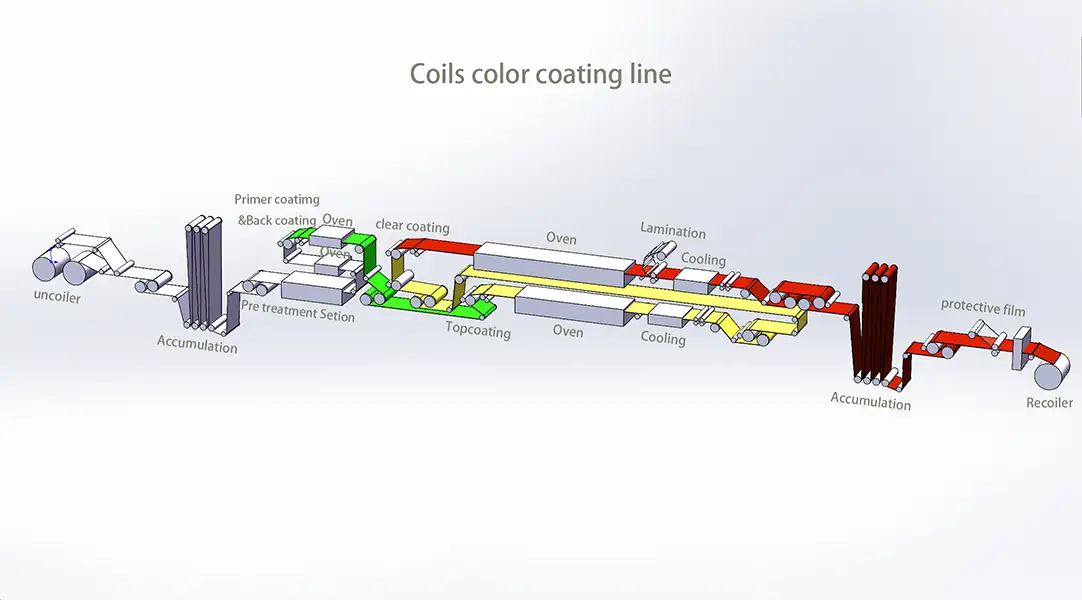
Entry Section and Coil Handling System
The process begins at the entry section, where steel coils or sheets are loaded into the production line. This area includes uncoilers, coil cars, and feeding equipment designed to handle heavy materials safely and efficiently.
Accurate coil handling is essential because improper feeding can affect strip alignment and overall coating consistency. Automated systems are commonly used to improve precision and reduce downtime during coil changes.
Cleaning and Pretreatment Section
Before steel enters the galvanizing stage, the surface must be completely cleaned. Any oil, grease, rust, or oxide layers can interfere with zinc adhesion and reduce coating quality.
The cleaning section usually includes:
- Degreasing tanks
- Acid pickling systems
- Rinsing units
- Drying equipment
Proper surface preparation ensures the zinc coating bonds effectively with the steel during immersion.
Annealing Furnace
The annealing furnace is one of the most critical sections of the line. In continuous galvanizing operations, steel strips pass through a controlled heating environment to improve mechanical properties and prepare the surface for coating.
The furnace operates under carefully managed atmospheric conditions to prevent oxidation. Temperature control is extremely important because it directly influences steel strength, surface finish, and coating adhesion.
Modern furnaces are designed for energy efficiency and stable thermal performance, helping manufacturers maintain consistent product quality.
Zinc Pot
The zinc pot is the core component of the galvanizing process. It contains molten zinc heated to a specific temperature range, allowing the steel strip to become fully coated during immersion.
As the steel passes through the molten zinc, metallurgical reactions occur between the zinc and steel surface. This creates alloy layers that provide strong corrosion resistance and long-lasting protection.
Maintaining stable zinc bath chemistry is essential for achieving uniform coating thickness and minimizing defects.
Air Knife System
After exiting the zinc bath, the steel strip passes through an air knife system. High-pressure air jets remove excess molten zinc from the surface and control the final coating thickness.
The air knife system plays a major role in determining surface smoothness and coating uniformity. Precise adjustments help manufacturers meet different coating specifications for various industrial applications.
Advanced air knife technology also helps reduce zinc consumption and improve production efficiency.
Cooling Section
Once the coating thickness is controlled, the galvanized steel enters the cooling section. Controlled cooling solidifies the zinc layer and stabilizes the coated surface.
Cooling methods may include:
- Air cooling
- Water quenching
- Combination cooling systems
The cooling process affects the final appearance and mechanical performance of the galvanized product.
Skin Pass Mill and Tension Leveler
Some galvanizing lines include a skin pass mill and tension leveler to improve surface finish and flatness. These systems help remove minor surface irregularities and enhance dimensional accuracy.
The skin pass process also improves paint adhesion for products that will undergo additional coating or finishing operations.
Inspection and Quality Control Systems
Modern galvanizing facilities rely heavily on automated inspection systems to maintain product quality. Sensors and monitoring equipment continuously measure coating thickness, strip alignment, and surface conditions during production.
Quality control systems help identify defects early, reducing waste and improving operational reliability. Real-time monitoring also allows operators to make quick process adjustments when needed.
Exit Section and Coil Rewinding
After inspection, the finished galvanized steel is rewound into coils at the exit section. Proper tension control during rewinding prevents damage to the coated surface and maintains product consistency.
Finished coils are then prepared for storage, transportation, or further processing depending on customer requirements.
Importance of Integrated System Design
Each section of a galvanizing line must operate in coordination with the others to achieve efficient and stable production. A well-designed system improves coating quality, reduces operational costs, and increases equipment lifespan.
Modern manufacturing facilities continue to invest in automation, energy-efficient equipment, and advanced monitoring technologies to meet growing industrial demands for high-performance galvanized steel products.
As industries such as construction, automotive manufacturing, and infrastructure development continue to expand, the role of advanced hot dip galvanizing systems remains increasingly important in supporting durable and corrosion-resistant steel production.