Essential Types of End of Line Packaging Machinery Used in Manufacturing
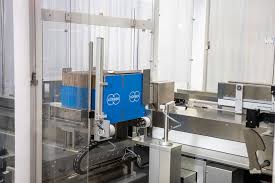
Manufacturing operations rely on efficient packaging processes to prepare finished products for storage, transportation, and delivery. After products have been filled, assembled, or placed in their primary containers, they must pass through several final packaging stages. These may include carton forming, product grouping, case packing, sealing, labeling, wrapping, and palletizing. Each stage requires suitable equipment to maintain product protection and support an organized production flow.
Selecting the right End of Line Packaging Machinery allows manufacturers to automate these activities and connect different packaging operations into a coordinated system. From simple carton sealers to advanced robotic palletizers, each machine performs a specific function. Understanding the main equipment types helps businesses identify suitable solutions based on production volume, product characteristics, packaging materials, and operational requirements.
1. Automatic Case Erectors
Case erectors are used to transform flat cardboard blanks into properly formed shipping cartons. The machine folds the carton panels and secures the bottom flaps using adhesive tape or hot-melt glue, depending on its design.
Automatic case erectors are particularly useful in facilities that process large numbers of cartons every day. They provide a consistent supply of prepared boxes for downstream packing equipment.
Common applications include:
- Food and beverage packaging.
- Household products.
- Electronics and accessories.
- Pharmaceutical distribution.
- Consumer goods manufacturing.
When selecting a case erector, manufacturers should consider carton dimensions, board thickness, forming speed, and compatibility with their preferred sealing materials.
2. Automatic Case Packing Machines
Case packing machines place finished products into shipping cartons or corrugated cases. They can handle different product arrangements depending on their configuration.
Some machines load products horizontally, while others use vertical loading methods. Robotic case packers use programmable arms and suitable gripping tools to pick products and position them inside cartons.
These machines help manufacturers maintain accurate product counts and reduce repetitive manual placement.
Case packers are commonly used for bottles, cans, boxes, containers, pouches, and other packaged products. The correct machine depends on product shape, weight, packaging format, and required production speed.
3. Carton Sealing Machines
Carton sealing machines close filled cartons and secure their flaps before products move to storage or distribution.
Depending on the application, they may use adhesive tape, hot-melt glue, or other sealing methods. Some models seal the top of cartons, while others handle both the top and bottom.
Common configurations include:
- Semi-automatic carton sealers: Require an operator to position or adjust cartons.
- Automatic carton sealers: Detect and process cartons with limited manual involvement.
- Uniform carton sealers: Handle boxes of similar dimensions.
- Random carton sealers: Automatically adjust to cartons with varying dimensions within specified limits.
Consistent carton sealing helps protect products and reduces the risk of boxes opening during handling.
4. Shrink Wrapping Machines
Shrink wrapping machines apply heat-shrinkable film around individual products or grouped packages. After the film is positioned, controlled heat causes it to contract around the items.
This creates a compact package that can help hold products together and provide an additional protective layer.
Shrink wrapping equipment is available in several configurations, including manual, semi-automatic, and fully automatic models.
Manufacturers commonly use these machines for beverage multipacks, food products, household goods, cosmetics, and promotional bundles.
Important selection factors include film compatibility, package dimensions, required output, heating method, and product sensitivity to temperature.
5. Stretch Wrapping Machines
Stretch wrapping machines secure products arranged on pallets by applying layers of stretch film around the load.
The film helps hold cartons and other packaged goods together, reducing unwanted movement during transportation and storage.
The main types include:
- Turntable stretch wrappers: Rotate the pallet while a film carriage applies wrapping material.
- Rotary arm wrappers: Move a wrapping arm around a stationary pallet.
- Orbital wrappers: Use a rotating film ring for suitable product configurations.
- Automatic stretch wrappers: Perform selected wrapping operations with minimal operator involvement.
Stretch wrappers are widely used in warehouses, distribution centers, food manufacturing, and industrial production facilities.
The appropriate model depends on pallet dimensions, load stability, weight, wrapping speed, and daily production requirements.
6. Robotic Palletizing Systems
Robotic palletizers use programmable robotic arms to transfer cartons, bags, containers, or other packages onto pallets.
The robot follows a programmed stacking pattern to arrange products in a stable configuration. Different gripping tools can be used depending on package size, shape, and weight.
One major advantage of robotic palletizing is flexibility. The same system may support different pallet patterns and product formats through suitable programming and tooling changes.
Robotic palletizers are particularly useful in manufacturing facilities that handle multiple products or need to automate repetitive lifting activities.
7. Conventional Automatic Palletizers
Conventional palletizers use mechanical systems to arrange packaged products into layers and transfer them onto pallets.
They are often designed for specific product types and high-volume production environments.
Common configurations include:
- Low-level palletizers: Receive products near floor level and arrange them into pallet loads.
- High-level palletizers: Use elevated handling mechanisms to build pallet layers.
- Layer palletizers: Arrange products into complete layers before transferring them onto pallets.
- Row-forming palletizers: Organize packages into rows before creating pallet patterns.
These systems are suitable for operations that require consistent stacking arrangements and continuous pallet preparation.
8. Conveyor Systems
Conveyors connect different machines and transport products between packaging stations. They play an important role in maintaining a continuous production flow.
Depending on the application, manufacturers may use belt conveyors, roller conveyors, chain conveyors, or specialized handling systems.
Product conveyors move individual packages and cartons, while pallet conveyors handle larger and heavier loads.
A properly designed conveyor layout can reduce manual transportation, improve workstation coordination, and prevent unnecessary product accumulation.
Important considerations include conveyor speed, load capacity, product dimensions, transfer points, and available floor space.
9. Automatic Labeling Machines
Labeling machines apply identification and information labels to cartons, containers, and finished packages.
In end-of-line applications, labels may include shipping information, product identification, barcodes, batch references, and handling instructions.
Different machines are designed for different surfaces and packaging formats. Some apply labels to the top or side of cartons, while others handle multiple surfaces.
Automatic labeling equipment helps maintain consistent label positioning and supports efficient product identification.
For reliable performance, manufacturers should consider label dimensions, adhesive type, package surface, printing requirements, and production speed.
10. Coding and Marking Equipment
Coding machines print variable information directly onto products, containers, cartons, or labels.
Common information includes:
- Manufacturing dates.
- Expiration dates.
- Batch and lot numbers.
- Product identification codes.
- Barcodes and other traceability information.
Inkjet printers, laser marking systems, and thermal transfer printers are among the technologies used for packaging identification.
The appropriate technology depends on the packaging surface, print requirements, production environment, and applicable industry regulations.
Coding equipment is particularly important in industries where accurate identification and traceability are essential.
11. Checkweighers
Checkweighers automatically measure the weight of products or packages as they move along a conveyor.
They compare measured weights with predefined limits and can identify packages that fall outside the accepted range.
Depending on system configuration, rejected products may be diverted from the production line for further inspection.
Checkweighers are widely used in food processing, pharmaceuticals, consumer goods, and other industries where package weight must meet specific requirements.
They can also provide production information that helps manufacturers monitor filling and packaging consistency.
12. Metal Detectors and Inspection Systems
Inspection equipment helps manufacturers identify selected foreign materials or packaging defects before finished products are shipped.
Metal detectors are designed to identify metal contamination in suitable product applications. Other inspection systems may use X-ray technology, machine vision, or specialized sensors to examine products and packages.
At the end of a packaging line, inspection equipment can help verify product quality and packaging compliance.
For example, a vision system may check whether labels are present and correctly positioned, while a metal detector examines products for certain types of metal contamination.
The inspection method should be selected according to product characteristics, risk assessments, and industry requirements.
13. Carton and Case Accumulation Systems
Accumulation equipment temporarily holds products or cartons between packaging stations.
This is useful when connected machines operate at different speeds or when one station requires a short interruption.
For example, a case sealer may process cartons more slowly than an upstream case packer. An accumulation conveyor can temporarily hold incoming cartons and help prevent immediate stoppages.
Accumulation systems may use controlled conveyor zones, sensors, and automated release mechanisms.
Their purpose is to balance product movement and reduce the effect of minor differences in machine operating speeds.
14. Pallet Wrapping and Load Stabilization Equipment
Pallet wrapping equipment prepares completed pallet loads for warehouse handling and transportation.
Stretch film is commonly used to secure cartons and maintain load stability. Some facilities also use corner boards, top sheets, straps, or other protective materials.
Automatic wrapping systems can be integrated with pallet conveyors and palletizing equipment to reduce manual handling.
The wrapping pattern, film tension, and number of layers should be adjusted according to pallet weight, carton arrangement, and transportation conditions.
How These Machines Work Together in a Manufacturing Line
Individual machines perform specific tasks, but their greatest value often comes from working as part of an integrated packaging system.
A typical end-of-line process may follow this sequence:
- Carton forming: A case erector prepares empty shipping boxes.
- Product loading: A case packing machine places products into the cartons.
- Carton closing: A sealing machine secures the filled boxes.
- Identification: Labeling and coding equipment applies required information.
- Quality inspection: Checkweighers or other inspection systems verify selected packaging requirements.
- Palletizing: A robotic or conventional palletizer arranges cartons on pallets.
- Load wrapping: A stretch wrapper secures completed pallet loads.
- Pallet transfer: Conveyor systems move finished loads toward storage or dispatch.
Not every manufacturer needs all these machines. The system should be designed around actual production requirements, product characteristics, and the level of automation required.
Factors to Consider When Choosing End of Line Machinery
Selecting suitable equipment requires more than comparing machine prices or advertised speeds. Manufacturers should evaluate several technical and operational factors.
Production Volume
Determine the required number of packages, cartons, or pallets per hour. Equipment capacity should be compatible with upstream production and downstream handling operations.
Product and Package Dimensions
The machine must accommodate the dimensions, weight, shape, and handling requirements of the products being processed.
Packaging Material Compatibility
Check whether the machinery supports the selected cartons, adhesive tapes, labels, films, and other packaging materials.
Automation Level
Businesses should decide whether manual, semi-automatic, or fully automatic equipment is appropriate. The decision depends on production volume, staffing, budget, and operating requirements.
Available Factory Space
Consider equipment dimensions, conveyor routes, maintenance access, operator positions, and material storage areas when planning the layout.
Maintenance and Technical Support
Reliable machinery requires routine servicing, accessible spare parts, and trained operators. Technical support should be considered during the equipment selection process.
Future Expansion
Manufacturers expecting higher output or more product variations should consider modular equipment and systems that allow additional machines or production lines to be integrated later.
Benefits of Using the Right Combination of Packaging Machinery
A well-planned end-of-line system can improve several areas of manufacturing operations.
- Higher productivity: Automated equipment can process repetitive packaging tasks at consistent speeds.
- Improved consistency: Programmable operations help maintain uniform carton sealing, labeling, and pallet patterns.
- Reduced manual handling: Machines can take over suitable lifting, packing, and stacking activities.
- Better product protection: Proper sealing and pallet stabilization help prepare products for distribution.
- More organized material flow: Conveyors and integrated controls coordinate movement between packaging stations.
- Greater production flexibility: Suitable equipment can support different products and packaging formats.
- Improved process visibility: Sensors and monitoring systems can provide useful information about machine performance.
These benefits depend on correct equipment selection, integration, operating conditions, and regular maintenance.
Conclusion
End-of-line packaging machinery includes a wide range of equipment, from case erectors and carton sealers to inspection systems, conveyors, stretch wrappers, and robotic palletizers. Each machine contributes to preparing finished products for safe handling, storage, and distribution.
Manufacturers should select machinery according to their production capacity, packaging requirements, available space, and long-term operational goals. Integrating compatible equipment into a coordinated system can help reduce bottlenecks, improve consistency, and create a more efficient packaging process.
For businesses evaluating modern packaging equipment and integrated production solutions, Techflow Pack provides an industry reference for exploring machinery options that support reliable and efficient end-of-line operations.