How to Select Energy-Efficient Swimming Pool Equipment

Running a swimming pool can increase household energy consumption, particularly when pumps, heaters, lighting, and cleaning systems operate regularly. Choosing energy-efficient equipment can help reduce electricity bills, control maintenance expenses, and make pool ownership more sustainable without compromising water quality or comfort.
For homeowners planning a new pool or upgrading an existing one, understanding equipment efficiency is an important first step. Comparing different swimming pool equipment and supplies can help you identify products that meet your pool’s needs while keeping long-term operating costs under control. The key is to evaluate how each component performs, how much energy it consumes, and whether it is compatible with the rest of the system.
Why Energy Efficiency Matters for Swimming Pools
Swimming pools rely on several systems to maintain circulation, filtration, sanitation, and comfortable water temperatures. These systems can consume considerable energy when they are incorrectly sized, poorly maintained, or operated inefficiently.
Energy-efficient equipment is designed to perform its intended function while using less electricity or fuel under suitable operating conditions. Although some efficient products have a higher upfront price, lower operating costs can make them more economical over time.
Efficiency also depends on how equipment is installed and used. Even a high-performance pump or heater may waste energy if it is poorly matched to the pool or operated without considering actual requirements.
Choose an Energy-Efficient Pool Pump
Pool pumps are among the most important components to evaluate when reducing electricity consumption. They circulate water through filters and other treatment equipment, helping maintain water clarity and effective sanitation.
Consider Variable-Speed Pumps
Variable-speed pumps allow users to adjust motor speed according to the pool’s circulation and cleaning requirements. Unlike single-speed pumps, which operate at a fixed speed, these models can run at lower speeds when high flow rates are unnecessary.
Reducing pump speed can significantly lower energy consumption in suitable systems. However, the pump must still provide adequate flow for filtration, heating, and any connected equipment.
When comparing models, consider the pump’s performance curve, motor efficiency, control options, noise levels, warranty, and compatibility with the existing plumbing.
Select the Correct Pump Size
A pump that is too large may consume unnecessary electricity and create excessive pressure within the circulation system. An undersized pump, on the other hand, may struggle to meet the pool’s required flow rate.
Choose a pump based on pool volume, plumbing resistance, filter capacity, and the flow requirements of connected equipment. Professional sizing guidance can help prevent inefficient operation and unnecessary upgrades.
Optimize Pump Operating Hours
Running a pump for longer than necessary can increase electricity costs. However, reducing operating hours too much can compromise circulation and sanitation.
Establish an appropriate schedule based on pool usage, water temperature, sanitizer requirements, and manufacturer recommendations. Variable-speed models may allow longer circulation periods at lower power consumption, provided the system continues to perform effectively.
Select an Efficient Pool Heating System
Heating can be a major operating expense, especially when a pool is used throughout the year. The right heating system depends on the local climate, desired water temperature, pool size, and frequency of use.
Heat Pumps
Pool heat pumps transfer heat from the surrounding air into the water. Under suitable conditions, they can deliver more heat energy than the electrical energy they consume because they move existing heat rather than generating all of it directly.
Their efficiency depends on outdoor temperature, humidity, water temperature settings, and the specific model. Performance generally decreases in colder conditions, so check the manufacturer’s specifications for the climate in which the equipment will operate.
Solar Pool Heating
Solar pool heating systems use sunlight to warm circulating water. Once installed, they can reduce the amount of conventional energy required for heating.
Their effectiveness depends on sunlight availability, collector size, roof orientation, installation space, and seasonal weather conditions. In some climates, a backup heating system may still be necessary.
Gas Pool Heaters
Gas heaters can raise water temperature relatively quickly, making them useful for pools that need occasional rapid heating. However, fuel consumption and operating costs may be higher than those of an efficient heat pump in suitable conditions.
Compare the cost of installation, local fuel prices, expected usage, and heating performance before selecting a system.
Use a Pool Cover to Reduce Heat Loss
A suitable pool cover can be one of the simplest ways to reduce energy waste. Water naturally loses heat through evaporation, and evaporation can account for a substantial portion of a heated pool’s heat loss.
Solar covers and other appropriate thermal covers help limit evaporation and retain heat when the pool is not in use. They can also reduce water loss and, in some circumstances, decrease the amount of sanitizing chemicals needed.
Choose a cover that fits the pool properly and suits the local climate. Remember that ordinary thermal covers are not necessarily designed to support a person’s weight and should not be treated as safety barriers.
Improve Filtration System Efficiency
Pool filters help remove suspended particles, but the energy required for filtration depends partly on pump operation and the resistance created by the system.
Choose the Right Filter Type
The three common pool filter types are sand, cartridge, and diatomaceous earth filters. Each has different maintenance requirements and operating characteristics.
Cartridge filters generally do not require routine backwashing, which can help conserve water. Sand filters can be relatively straightforward to maintain, while diatomaceous earth filters provide fine filtration but require careful handling and servicing.
The best choice depends on your pump, water quality requirements, available maintenance time, and local water conditions. No filter type automatically guarantees lower electricity consumption, so consider the entire circulation system.
Maintain Clean Filters
A filter that has accumulated excessive debris can restrict flow and affect system performance. Monitor filter pressure according to the manufacturer’s instructions and clean the filter when necessary.
Avoid both extremes: neglecting a clogged filter can impair circulation, while unnecessary cleaning or backwashing can waste water and resources.
Properly maintained equipment helps the system operate closer to its intended performance.
Invest in Energy-Efficient Pool Lighting
Pool lighting improves visibility and allows swimmers to use the pool during evening hours. Replacing older, less efficient fixtures with LED lighting can reduce electricity consumption.
LED pool lights typically use less energy than traditional incandescent pool lights and often have a longer service life. They are available in different brightness levels, colors, and designs.
When choosing replacement lights, check their compatibility with the pool fixture, voltage requirements, waterproofing specifications, and applicable electrical safety standards. Electrical work near swimming pools should be completed by a qualified professional.
Consider Efficient Pool Cleaning Equipment
Automatic pool cleaners can reduce manual cleaning effort, but their energy use varies by design.
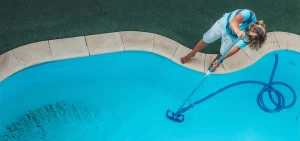
Robotic pool cleaners generally operate independently of the pool’s main circulation pump. This can reduce the need to increase pump operation solely for vacuuming, although the cleaner itself consumes electricity.
Suction-side and pressure-side cleaners depend on the pool’s circulation setup and may affect pump operating requirements. Their overall efficiency depends on the equipment combination and how it is used.
Before buying a cleaner, compare cleaning coverage, cycle duration, power consumption, maintenance requirements, and compatibility with your pool surface. A suitable manual cleaning tool may also be sufficient for smaller pools with limited debris.
Use Smart Controls and Automation
Automation can help pool owners operate equipment according to actual needs instead of relying on fixed schedules that may waste energy.
Programmable controls can manage pump schedules, lighting, and compatible heating equipment. Some systems also allow users to adjust settings remotely or monitor operating conditions.
Useful features may include:
- Variable-speed pump scheduling.
- Automatic lighting schedules.
- Temperature controls for pool heaters.
- Equipment monitoring and alerts.
- Integration with compatible pool management systems.
Automation is most useful when the settings are configured correctly. Review schedules periodically and adjust them when swimming habits, weather, or seasonal requirements change.
Evaluate the Total Cost of Ownership
Energy-efficient equipment sometimes costs more initially, so it is important to compare its expected lifetime expenses rather than focusing only on the purchase price.
Consider the following factors before making a decision:
- Purchase and installation costs: Include any plumbing changes, electrical work, or additional components.
- Energy consumption: Review the manufacturer’s performance data and estimate operating expenses using local electricity or fuel prices.
- Maintenance requirements: Account for servicing, cleaning, replacement parts, and filter media.
- Expected lifespan: Consider durability, warranty coverage, and availability of technical support.
- Potential savings: Estimate how much less the equipment may cost to operate compared with your existing system.
Actual savings depend on pool size, usage, climate, utility rates, and installation quality. Comparing realistic operating scenarios will help you determine whether a more efficient product is worth the additional investment.
Common Mistakes to Avoid When Buying Energy-Efficient Pool Equipment
Even equipment marketed as energy-efficient can perform poorly when it is unsuitable for the pool or installed incorrectly.
Choosing based on labels alone: Review technical specifications and performance data rather than relying only on general efficiency claims.
Buying an oversized pump: Excessive capacity can increase costs and create unnecessary system pressure. Match the pump to the required flow rate and plumbing resistance.
Ignoring the pool cover: Heating equipment may consume more energy than necessary when the pool loses heat rapidly through evaporation.
Overlooking maintenance: Dirty filters, obstructed baskets, and poorly maintained components can affect system performance.
Setting unrealistic operating schedules: Excessive pump runtime wastes electricity, but inadequate circulation can compromise water quality. Find a schedule that meets the pool’s actual needs.
Forgetting installation requirements: Incorrect installation can reduce efficiency and create safety risks. Follow manufacturer specifications and use qualified professionals for specialized work.
Practical Steps to Make Your Existing Pool More Efficient
You do not always need to replace every component to reduce energy consumption. Several practical improvements can make an existing pool system more efficient.
Start by checking the pump’s operating schedule and inspecting the filter, skimmer baskets, and circulation lines. Remove restrictions that interfere with normal flow, and correct leaks promptly.
If your pool is heated, use an appropriate cover when it is not in use and review the temperature setting. Replace inefficient lighting when suitable, and consider upgrading to a variable-speed pump if your current model consumes excessive electricity.
Prioritize improvements according to your pool’s energy use and budget. Reviewing utility bills and recording equipment operating hours can help identify where the greatest savings may be possible.
Conclusion
Selecting energy-efficient swimming pool equipment involves balancing performance, operating costs, maintenance, and long-term value. Variable-speed pumps, suitable heating systems, thermal pool covers, efficient lighting, and well-maintained filtration equipment can all contribute to lower energy consumption when chosen and used appropriately.
Begin by evaluating your pool’s current setup and identifying the components responsible for the highest operating costs. Compare equipment specifications, verify compatibility, and consider realistic lifetime expenses before purchasing.
With careful selection and consistent maintenance, you can improve your pool’s efficiency, control running costs, and maintain a comfortable swimming environment without compromising essential circulation, sanitation, or safety.