Types of M12 Connectors and Their Industrial Applications
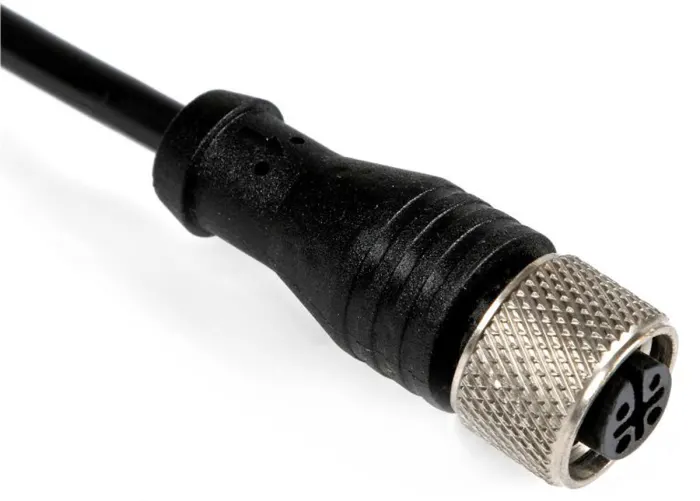
M12 connectors are among the most widely used circular connectors in industrial automation, robotics, and factory control systems. Their compact size, reliable performance, and versatility make them ideal for connecting sensors, actuators, and communication devices in a variety of applications. Understanding the different types of M12 connectors and their specific industrial uses is essential for engineers and system designers seeking to optimize connectivity and ensure long-term reliability.
The M12 Connector offers standardized pin configurations, multiple coding options, and robust mechanical design, allowing it to operate effectively in demanding industrial environments. By selecting the right type of M12 connector, companies can improve system efficiency, reduce maintenance issues, and achieve secure and reliable connections across diverse industrial setups.
Standard Types of M12 Connectors
M12 connectors are available in a variety of types, each designed for specific applications. The primary classifications are based on coding, pin count, and connection method. Understanding these distinctions helps in choosing the most suitable connector for a particular industrial need.
A-Coded M12 Connectors
A-coded M12 connectors are the most common type and are primarily used for sensor and actuator connections. They are typically available with 3, 4, or 5 pins, providing simple power and signal connections. A-coded connectors are widely used in factory automation, conveyor systems, and machine vision applications. Their straightforward design ensures easy installation and reliable performance in environments where basic signal transmission is required.
B-Coded M12 Connectors
B-coded M12 connectors are designed for fieldbus communication systems such as Profibus and CANopen. They usually feature 4 or 5 pins and are optimized for data transmission over industrial networks. B-coded connectors are ideal for linking sensors, actuators, and programmable logic controllers (PLCs) in complex automation systems. Their robust construction ensures stable data transfer even in environments subject to vibration and electrical noise.
D-Coded M12 Connectors
D-coded M12 connectors are specifically designed for high-speed data transmission applications, such as Industrial Ethernet (EtherCAT, Profinet, and Ethernet/IP). They commonly feature 4 pins and support fast communication with minimal signal interference. D-coded connectors are widely used in applications where reliable real-time data exchange is critical, such as robotics, automated assembly lines, and industrial control networks.
X-Coded M12 Connectors
X-coded M12 connectors are used for very high-speed data applications, supporting data rates up to 10 Gbps. These connectors typically have 8 pins and are designed with enhanced shielding to prevent crosstalk and electromagnetic interference. X-coded connectors are essential in industrial networks that require extremely fast communication and high bandwidth, such as machine vision systems, industrial servers, and automation hubs.
L-Coded and S-Coded M12 Connectors
L-coded and S-coded M12 connectors are specialized connectors for specific power and hybrid applications. L-coded connectors are commonly used for DC power connections, particularly in lighting systems or low-voltage industrial equipment. S-coded connectors are hybrid connectors capable of transmitting both power and signal through a single connection, reducing cable clutter in complex automation setups.
Key Features of M12 Connectors
M12 connectors share several important features that make them suitable for industrial applications:
-
Compact Size: The 12 mm diameter allows for space-saving installation, especially in densely packed machinery and control panels.
-
Threaded Coupling: Ensures secure and vibration-resistant connections, which is crucial in environments with mechanical movement.
-
Environmental Protection: Many M12 connectors offer IP65, IP67, or higher protection ratings, making them resistant to dust, water, and other contaminants.
-
Versatile Pin Configurations: M12 connectors support 3 to 12 pins, allowing flexible use for different signal, power, or data requirements.
-
Durability: They are designed for repeated mating cycles, often exceeding 1,000 insertions, ensuring long-term reliability in industrial settings.
Industrial Applications of M12 Connectors
M12 connectors are highly versatile and can be found in a wide range of industrial applications:
Sensor and Actuator Connections
A-coded M12 connectors are commonly used to link sensors and actuators to control systems. They transmit power and signals reliably in environments such as production lines, packaging machines, and automated material handling systems.
Industrial Networking
D-coded and X-coded M12 connectors are widely used in industrial networking applications. They support fast and secure data transfer in Ethernet-based communication systems, enabling real-time monitoring and control in robotics, automated manufacturing, and process control.
Fieldbus Systems
B-coded M12 connectors are used extensively in fieldbus networks, such as Profibus and CANopen, connecting multiple devices over a shared communication bus. Their robust design ensures reliable data transfer even in electrically noisy industrial environments.
Power Transmission and Hybrid Applications
L-coded and S-coded M12 connectors are ideal for supplying DC power or combining power and signal lines into a single connection. These connectors simplify wiring, reduce installation complexity, and are particularly useful in lighting systems, hybrid machines, and complex automation setups.
Conclusion
M12 connectors provide versatile, reliable, and compact solutions for a wide range of industrial applications. With multiple coding options, varying pin configurations, and robust mechanical and environmental protection, M12 connectors can be tailored to specific needs, from simple sensor connections to high-speed data transmission and hybrid power systems. By understanding the types of M12 connectors and their industrial applications, engineers can ensure efficient, safe, and long-lasting connectivity in modern industrial automation and control systems.